


This article will guide you on how to add a Linksys Intelligent Mesh™ child node to a Linksys Cognitive™ Mesh router in a mixed network environment where, in some cases, adding an Intelligent child node fails to onboard to a Cognitive Mesh router.
Example scenario:
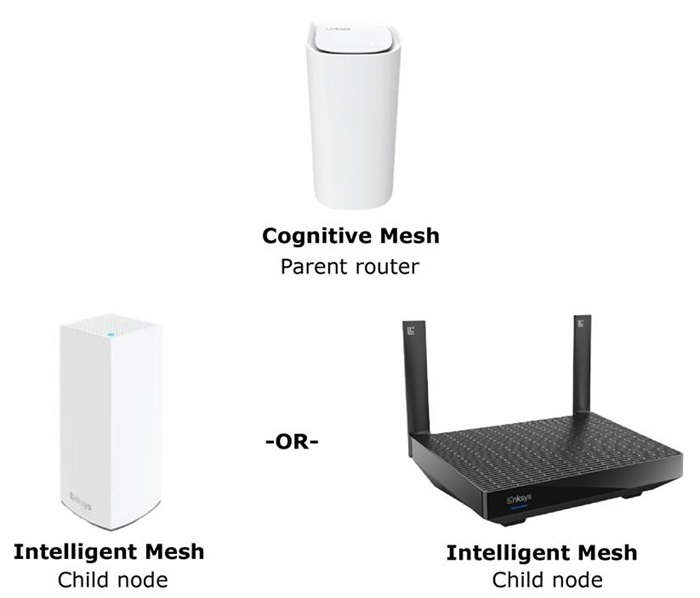
Linksys uses two types of Mesh technologies: Cognitive Mesh and Intelligent Mesh. Although it’s recommended to use the same Mesh technology in a network, there can be situations where you may want to mix Mesh types.
There may be some edge cases where adding an Intelligent Mesh node to a Cognitive Mesh node may not work, depending on the method being used.
It is highly recommended in a mixed environment to use the node with the latest technology as the parent router, when possible, for better performance. Because Cognitive Mesh is the newer and more advanced technology, it should serve as the main router to ensure optimal performance and avoid potential network bottlenecks as you expand your system.
Before you begin:
- The Cognitive Mesh parent router, which is the router connected to your modem, should already be set up and online. The child node is an additional node used to expand your WiFi network.
- Determine if your Linksys model is a Cognitive Mesh router or an Intelligent Mesh router.
- If you need to switch the parent router, let’s say a Cognitive model within your network, you will need to reset all your nodes. Then, set up the Cognitive parent router first. Learn the initial parent router setup of a Cognitive Mesh router.
There are a few ways to add the child node in this scenario. Either use the Linksys app or the web interface (requires an ethernet cable). Choose the method that best fits your scenario.
If you are using the Linksys app and the parent router is the MBE7000, MX6200, LN1400, or LN1100 model, you can use the app to add the child node. Otherwise, choose the web interface method.
Linksys app – iOS
Linksys app – Android™
1. Confirm that the Cognitive parent router is fully set up and functioning. The LED should be solid white.
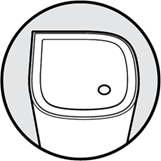
Cognitive parent router – Solid white light – Online
2. Power ON the Intelligent Mesh child node near the parent router, preferably in the same room as the parent router, and verify that its LED is solid purple, which indicates it is ready for setup.
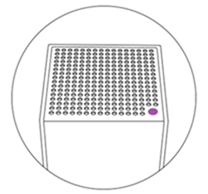
Child node – Solid purple light – Ready for setup
NOTE: If the light is red, hold down the reset button on the child node for about 20 seconds and wait until it turns solid purple.
3. Make sure your mobile device is connected to your Linksys WiFi network. Log in to the Linksys app.
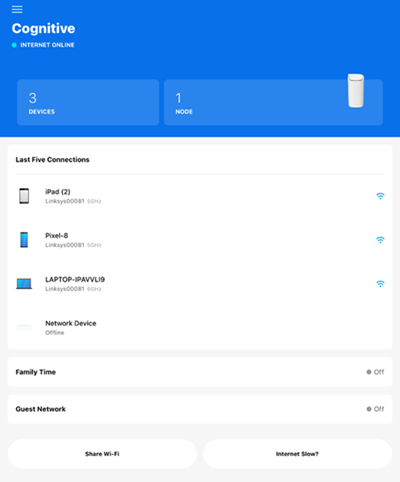
4. Tap the Menu  icon located at the upper-left corner of the screen. Scroll down and select Set up a New Product.
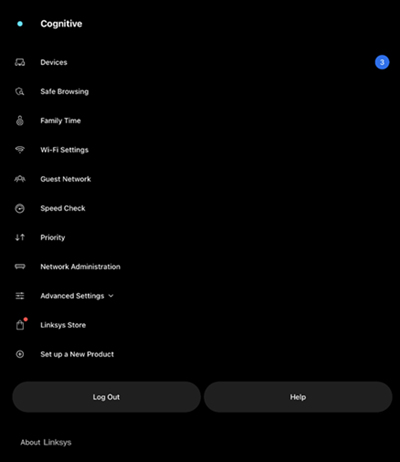
5. Choose Add a node to [WiFi name].
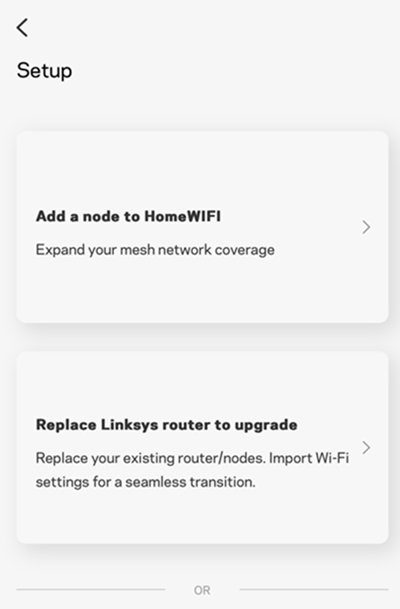
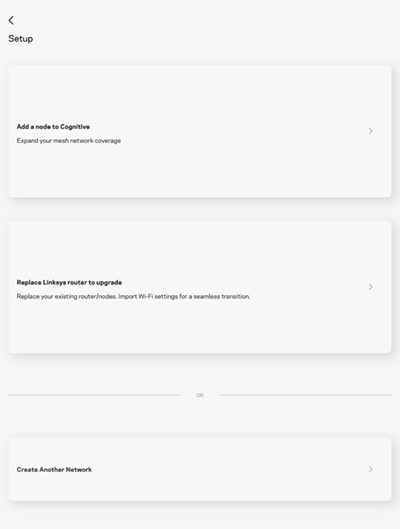
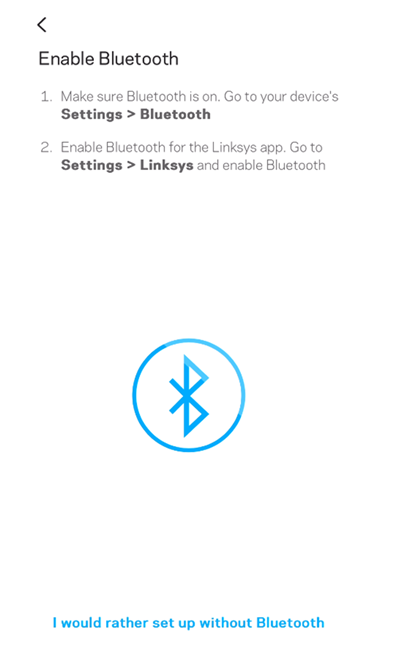
6. Follow the on-screen instructions and wait for a few minutes while the app adds your child node. Enable your Bluetooth® settings on your mobile device if prompted.
7. The child node's LED will blink purple and then turn solid blue once the setup is successful.
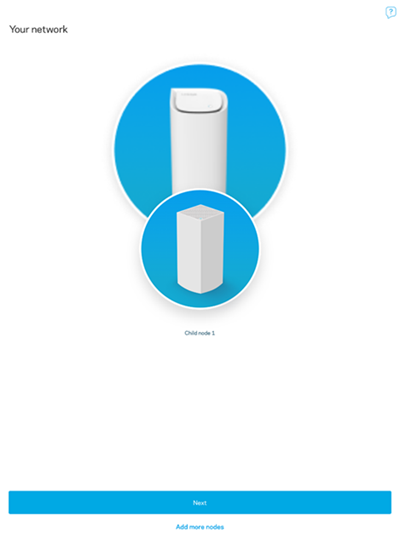
8. Tap Finish. You can now move your child node.
1. Confirm that the Cognitive parent router is fully set up and functioning. The LED should be solid white.
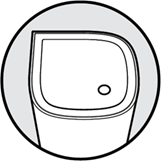
Cognitive parent router – Solid white light – Online
2. Power ON the Intelligent Mesh child node near the parent router, preferably in the same room as the parent router, and verify that its LED is solid purple, which indicates it is ready for setup.
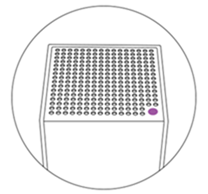
Child node – Solid purple light – Ready for setup
NOTE: If the light is red, hold down the reset button on the child node for about 20 seconds and wait until it turns solid purple.
3. Make sure your mobile device is connected to your Linksys WiFi network. Log in to the Linksys app.
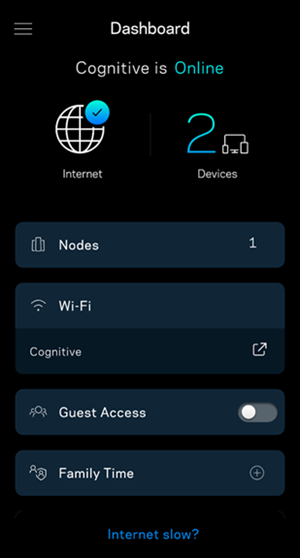
4. Tap the Menu  icon located at the upper-left corner of the screen.
5. Scroll down and select Set Up a New Product.
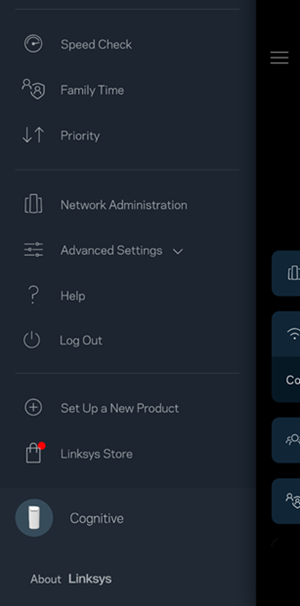
6. Choose Add a node to [WiFi name].
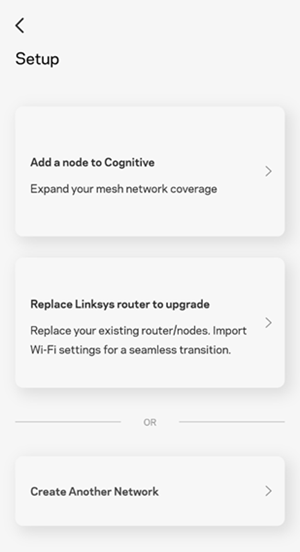
7. Follow the on-screen instructions and wait for a few minutes while the app adds your child node.
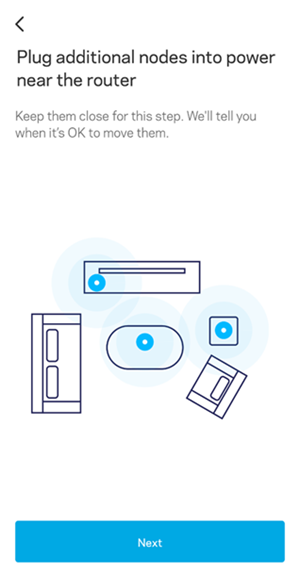
8. The child node's LED will blink purple and then turn solid blue once the setup is successful.
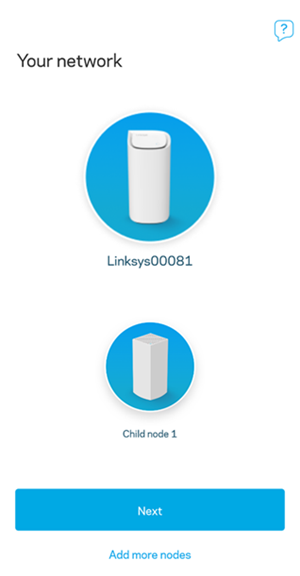
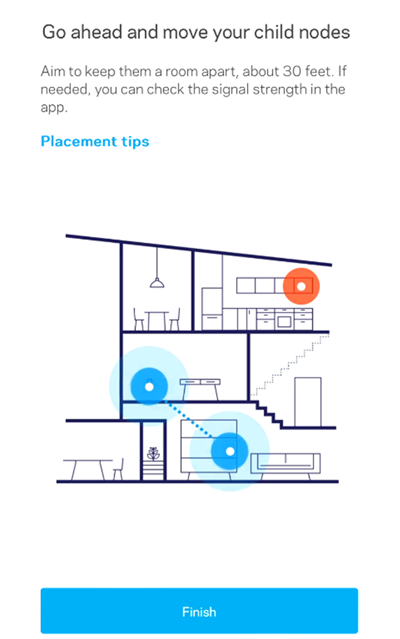
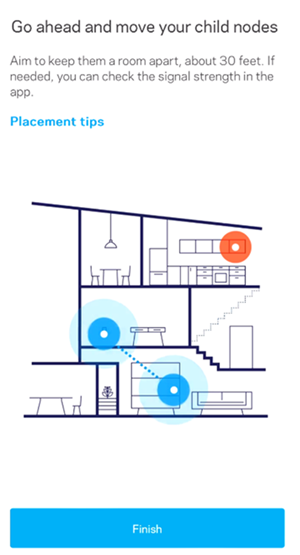
9. Tap Finish. You can now move your child node.
You can also use this method as a workaround for all Cognitive Mesh models. With this method you will need an ethernet cable; add the child as a wired child node first and then switch it to a wireless node.
- Web interface via Linksys Smart WiFi (Parent router model: MBE7000, MX6200, LN1400, or LN1100). This requires a desktop computer and an ethernet cable.
- Auto-Onboarding using LinksysNOW Routers (Parent router model: LN1600, SPNM60, or SPNM62). This requires an ethernet cable.
Web interface via Linksys Smart WiFi
Requirements: A desktop computer and an ethernet cable.
Supported parent router models are MBE7000, MX6200, LN1400, and LN1100 only.
1. Confirm that the Cognitive parent router is fully set up and functioning. The LED should be solid white.
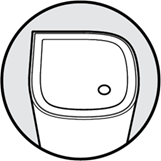
Cognitive parent router – Solid white light – Online
2. From a desktop computer, open a web browser and enter "www.myrouter.info" or "myrouter.info" into the Address bar and press [ENTER]. You can also use "https://192.168.1.1".
Enter your router password and click Sign in. If you have forgotten the password, click Reset password to recover it.
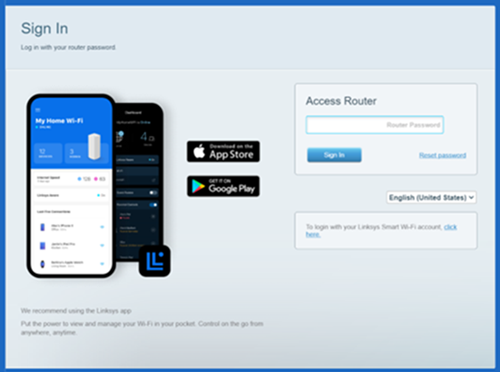
3. Once inside the web interface, click the CA link located at the lower-right corner of the page.

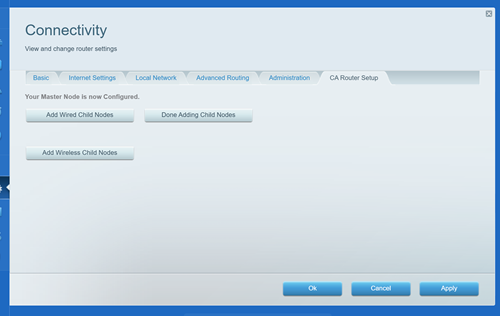
4. Go to Connectivity and open the CA Router Setup tab.
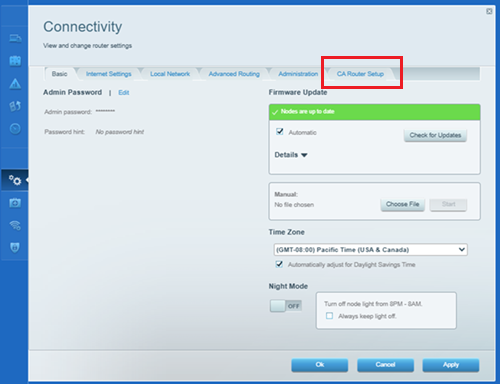
5. Power ON the Intelligent Mesh child node near the parent router and verify that its LED is solid purple, which indicates it is ready for setup.
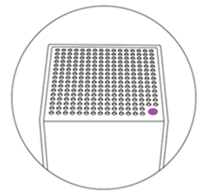
Child node – Solid purple light – Ready for setup
NOTE: If the light is red, hold down the reset button on the child node for about 20 seconds and wait until it turns solid purple.
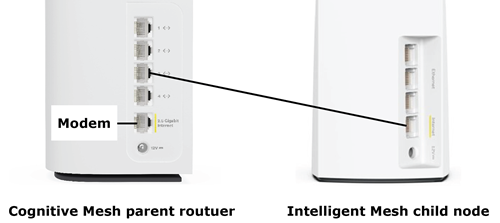
6. Once your child node is wired to the parent as previously instructed and it has a solid blue light, click Add Wired Child Nodes in the CA Router Setup section.
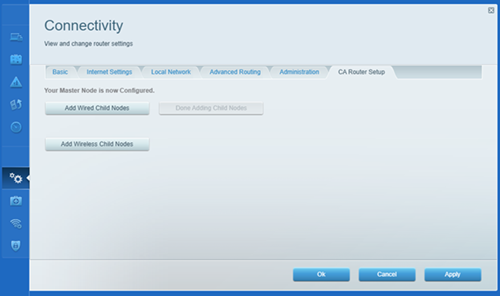
7. The light on the child will begin blinking; this may take about 2 minutes. Once the light starts blinking, this indicates that wired onboarding has begun. Please wait until the process is complete; this may take a few minutes more.
Once the child node has a solid blue light, the child node has been successfully added as a wired child node.
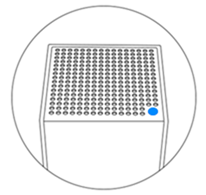
Child node – Solid blue light – Online and connected to network
8. Now to convert the wired child node into a wireless child node, simply disconnect the ethernet cable. The light on the child node will begin blinking again; this indicates that it has detected the disconnection from the parent router and is now switching to connect as a wireless node. Wait until the light is solid blue again.
Once the light turns solid blue, it has successfully switched to a wireless child node of the network. You can now move your child node.
NOTE: If the LED continues blinking red for more than a few minutes, reboot the child node.
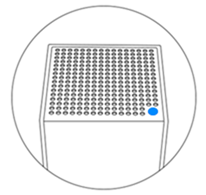
Child node – Solid blue light – Online and connected to network
9. Click Done Adding Child Nodes. You can now move your wireless child node.
Auto-Onboarding using LinksysNOW Routers
Requirement: One ethernet cable
Supported parent router models are LN1600, SPNM60, and SPNM62 only.
Cognitive parent routers running on LinksysNOW firmware support Auto-onboarding over a wired connection automatically, so the setup process will be slightly different.
1. Confirm that the Cognitive parent router is fully set up and functioning. The LED should be solid white.
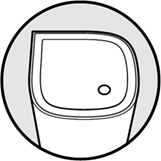
Cognitive parent router – Solid white light – Online
2. Power ON the Intelligent Mesh child node and verify that its LED is solid purple, which indicates it is ready for setup.
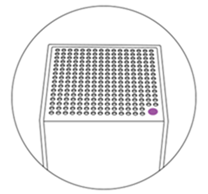
Child node – Solid purple light – Ready for setup
NOTE: If the light is red, hold down the reset button on the child node for about 20 seconds and wait until it turns solid purple.
3. Connect an ethernet cable from the LAN port of the Cognitive parent node to the Internet port of the Intelligent child node.
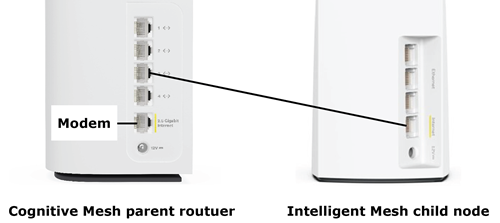
4. The light on the child will begin blinking; this may take about 2 minutes. Once the light starts blinking, this indicates that wired onboarding has begun. Please wait until the process is complete; this may take a few minutes more.
Once the child node has a solid blue light, the child node has been successfully added as a wired child node.
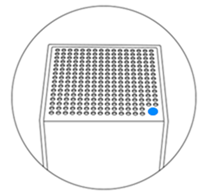
Child node – Solid blue light – Online and connected to network
5. Now to convert the wired child node into a wireless child node, simply disconnect the ethernet cable. The light on the child node will begin blinking again; this indicates that it has detected the disconnection from the parent router and is now switching to connect as a wireless node. Wait until the light is solid blue again.
Once the light turns solid blue, it has successfully switched to a wireless child node of the network. You can now move your child node.
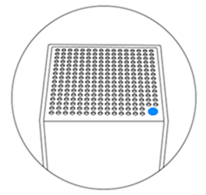
Child node – Solid blue light – Online and connected to network

