


Power over Ethernet (PoE) is a smart way to send electric power and internet data through the same Ethernet cable.

Normally, a device needs:
- One cable for internet
- One cable for power
With PoE, you only need one cable. That’s it. One cable does both jobs.
PoE makes life easier because:
- You don’t need a nearby wall outlet
- Fewer cables = less mess
- Devices can be placed almost anywhere
- Setup is faster and cleaner
Think of PoE as a two-in-one cable: Internet + Power.
What does a PoE network switch do?
A PoE network switch is like a power-giving internet distributor.
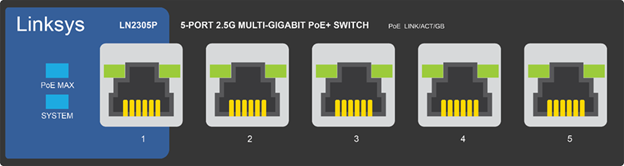
It:
- Sends internet data to devices
- Sends power to devices
- Does both at the same time
- Uses regular Ethernet cables
If a device supports PoE, the switch knows and safely sends power. If it does not, no power is sent, so nothing gets fried.
Imagine this:
You want to install a security camera on a high wall outside your home.
Without PoE:
- You need an outlet nearby
- You might drill more holes
- You deal with messy wiring.
With PoE:
- One ethernet cable from the PoE switch (PSE)
- Camera gets power + internet
- Cleaner, safer, and easier
PoE is popular because it is:
- Efficient
- Safer than DIY power wiring
- Easier to maintain
- Great for homes, offices, and businesses
In short, PoE turns your network cable into a power cable, and the PSE supplies that power.
What is Power Sourcing Equipment (PSE)?
PSE stands for Power Sourcing Equipment. This is just a fancy name for the device that provides power in a PoE setup. In simple terms, the PSE is the power giver.
Common PSE examples:
- A PoE network switch (most common)
- A PoE injector (used when the switch has no PoE)
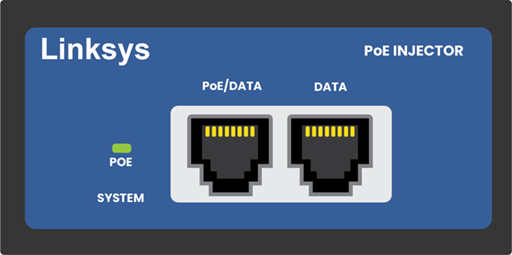
The PSE is smart. Before sending power, it:
- Checks if the connected device actually supports PoE
- Sends only the amount of power needed
- Stops power if the device does not need it
That’s why PoE is safe even for regular non-PoE devices.
What is Active versus Passive PoE?
Active PoE follows recognized technical standards such as:
- IEEE 802.3af
- IEEE 802.3at
- IEEE 802.3bt
Its key characteristics are:
- Checks if the connected device supports PoE before sending power
- Automatically adjusts to the device’s required power level
- Designed with built-in protection to prevent damage
Passive PoE, on the other hand, does not follow IEEE negotiation standards.
Its key characteristics are:
- Sends power immediately without checking compatibility
- Delivers fixed voltage
- Requires exact voltage matching between the power source and the device
If you are unsure, it is recommended to choose Active (IEEE-standard) PoE. It significantly reduces the risk of equipment damage, and it is compatible with most current networking devices.
What is a Powered Device (PD)?
A Powered Device (PD) is any device that receives electrical power through a network cable using PoE. It does not generate or send power. It only receives and uses power supplied through the ethernet cable.
In the PoE setup below, the IP security camera is the equipment being powered, not the one supplying power.
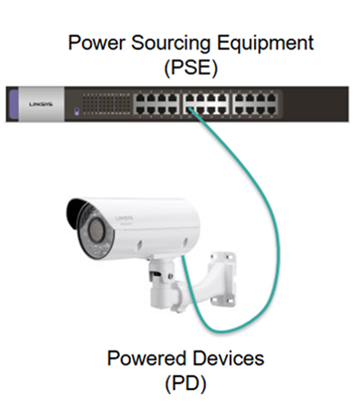
Other common examples for PD are:
- Wireless access points
- VoIP desk phones
- Some network intercoms
- Certain smart lighting or IoT devices
Here are everyday examples you’ll actually see:
Security Cameras
Instead of running:
- One cable for video
- One cable for power
PoE cameras use one cable only. Clean, simple, and professional.
WiFi Access Points
Ever wonder how those WiFi boxes on the ceilings of cafes and schools get power? Most use PoE, so they don’t need a bulky power outlet installed on the ceiling.
IP Phones
Office phones can run entirely on PoE. Even if the power goes out, the phone may still work if the switch has a backup power source.
Door Access Systems
Keycard or fingerprint scanners near doors often use PoE because outlets near doors are awkward.
There are three main “strengths” to PoE:
1. Standard PoE (Basic Level): 802.3af
This provides a small amount of power (up to 15.4W).
2. PoE+ (Middle Level): 802.3at
This provides double the power (up to 30W).
3. PoE++ ("Super" Level)
a. 802.3bt Type 3 or PoE++/UPoE
Type 3: Delivers up to 60W.
- High-performance Wi-Fi® 6 or Wi-Fi® 6E Access Points
- Motorized, outdoor-rated PTZ (Pan-Tilt-Zoom) security cameras with built-in heaters/wipers
- Video conferencing systems and integrated A/V equipment
- Point-of-Sale (POS) kiosks and digital signage controllers
b. 802.3bt Type 4 or UPoE+
Type 4: Delivers up to 90W-100W.
- Next-generation Wi-Fi® 7 access points
- PoE-powered LED lighting systems (smart lighting infrastructure)
- Mini-PCs and compact desktop computers
- Large, interactive touch panel displays and control panels
- Industrial sensors and controllers that require robust power
All that means is:
- More plus signs = more power available
Basic devices need basic PoE. Big devices like advanced cameras need PoE+ or PoE++.

